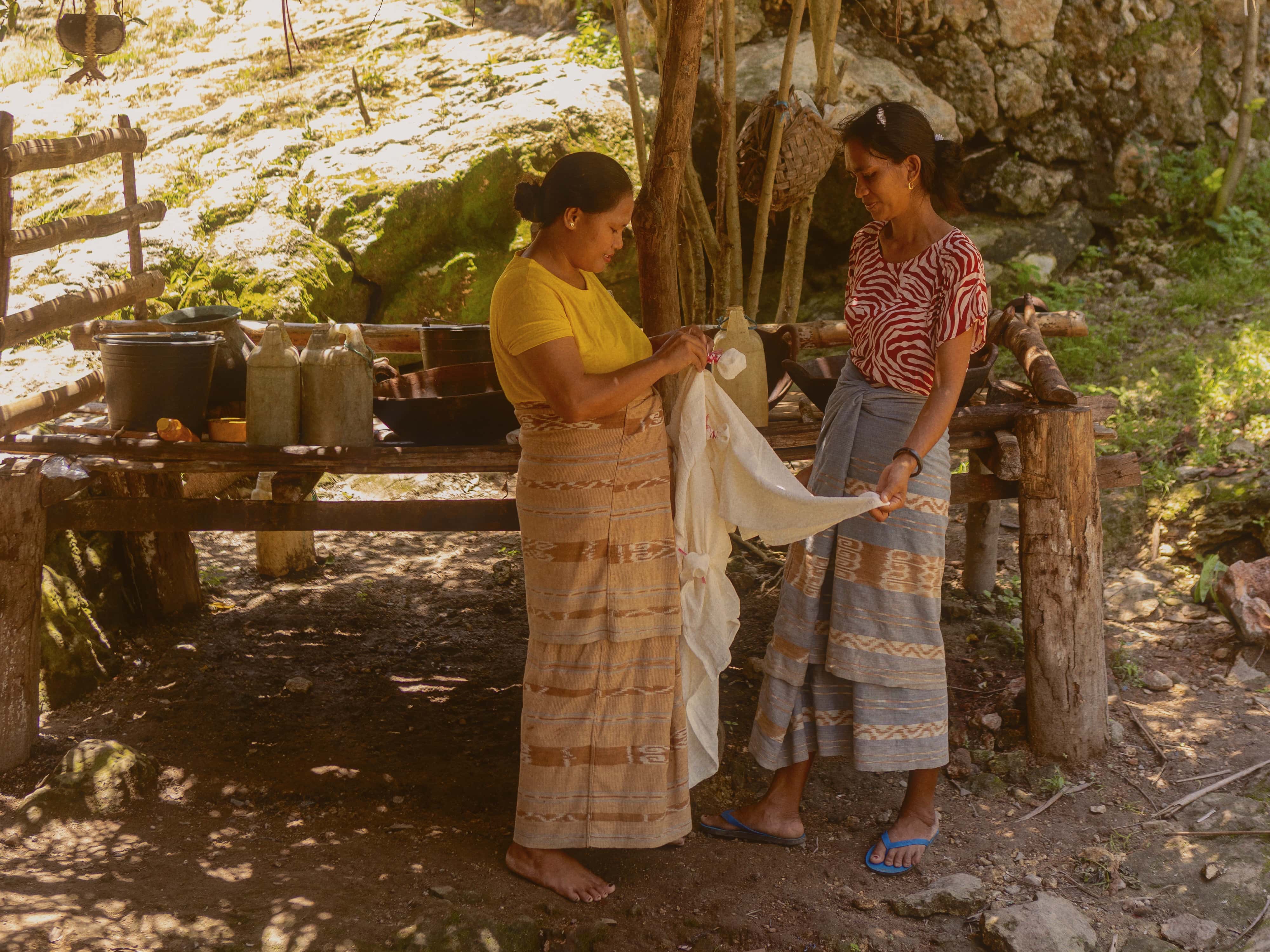
The usual resorts tend to offer consignment items such as sunscreens and tote bags at their boutique stores. Here at The Sanubari Sumba, one of the world’s most distinguishing Sumba island hotels, however, you’ll find entirely unique artisanal crafts to bring a piece of the land home with you.
At The Sanubari, souvenirs or keepsakes you’ll find include handcrafted Ikat fabrics that may require months of lengthy manual process, pandan-woven souvenirs handmade entirely by the local women we partner with, locally-sourced snacks and accessories, and, just as an honourable mention, etched deep in our villa interior, plenty of Mamoli shaped decorations that pay tribute to the rich Sumbanese heritage.
Visiting any Sumba Hotels in Indonesia means having a special encounter with the island’s fascinating, living megalithic culture, and keepsakes is when this culture turns into a physical object you can carry home as a memento. Every piece comes directly from the hands of our local partnering artists, mostly females who learned their crafts from their mothers and grandmothers.
Key Takeaways: Why Sumba Keepsakes Are Different From What You Usually Find in Other Remote Islands
- Sumbanese Ikat and pandan-woven crafts rely fully on local, natural materials, so what you buy here is tied to the land in a way that can’t be replicated anywhere else.
- Crafting a single Ikat cloth is a lengthy process with as many as 42 nuanced steps, stretching across months, even a year, to reach completion. Originally, Ikat fabrics are designed for use in festive or ceremonial purposes.
- Ikat patterns carry a unique story and symbolism to it. Horses, roosters, buffalos are animals most commonly used as these symbols, and they often touch on ancestral history, social standing, and spirituality within the culture of Sumba.
- When you purchase a souvenir or keepsake from The Sanubari, a percentage of the sales go straight into the hands of local families and artists we partner with. This is one of the many ways we give back to the local community and provide economic support for them, especially for the women in West Sumba.
- The keepsakes fill your shelves with things you’ll actually use, especially the pandan-woven items. In other words, these souvenirs won’t get forgotten in a drawer. They’ll become part of your daily life, carrying a bit of Sumba with you wherever you go.
Why Are Sumba's Crafts Considered Among the Most Significant in Indonesia?
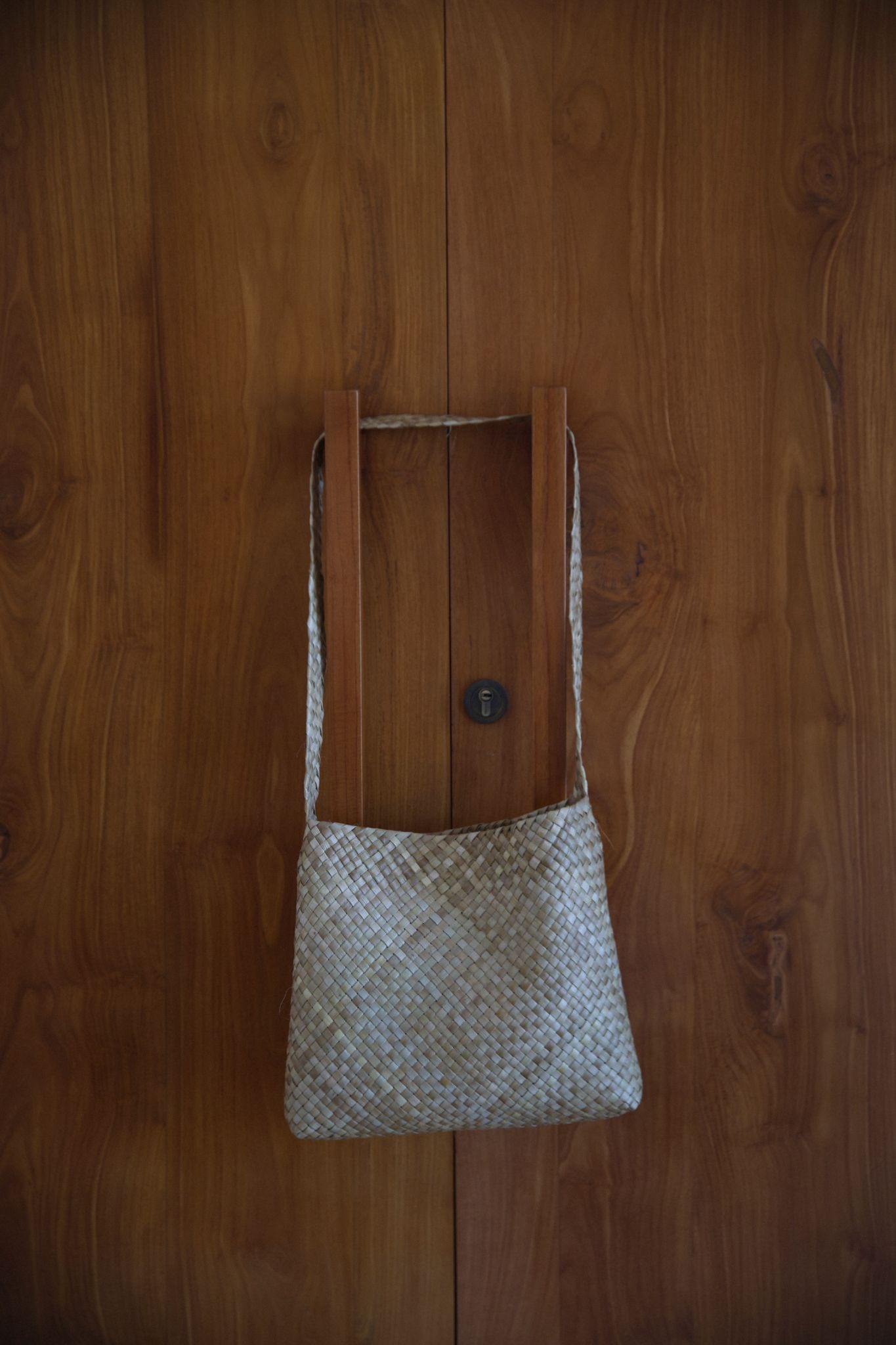
Traditional Sumbanese keepsakes stand out because the common person might not be able to intentionally replicate the craft behind. Most, if not all, of the locally-produced souvenirs you’ll encounter in Sumba are handmade from start to finish. Take Sumba Ikat, for example. The artist starts their craft with local cotton, handspun from scratch, before dyeing the yarn using natural plants (the necessary materials required to achieve that distinguishable deep indigo blue and warm reddish-brown hues). They also utilize traditional backstrap looms as a tool to weave the threads that will carefully tie and dye precise patterns into the yarn.
A single piece of Ikat can take a team of three to ten women working across the spinning, dyeing, and weaving stages. Absolutely no synthetic shortcuts exist in traditional production, mind you. The result is a truly beautiful fabric that carries the specific ecology, skill lineage, and symbolic vocabulary of this island in a way that nothing mass-produced can even approximate. It's a huge part of why The Sanubari consistently appears in conversations regarding Sumba's best hotels, and the reason why travelers often visit to experience this precise cultural depth.
What Are the Most Meaningful Things to Bring Home From Sumba Island Travel?
Traditionally, each item has a historical and ceremonial value of use. Even nowadays, these items are still utilized in weddings, funerals, and adat rituals within villages surrounding The Sanubari Sumba.
What Makes Ikat Different From Other Indonesian Textiles?
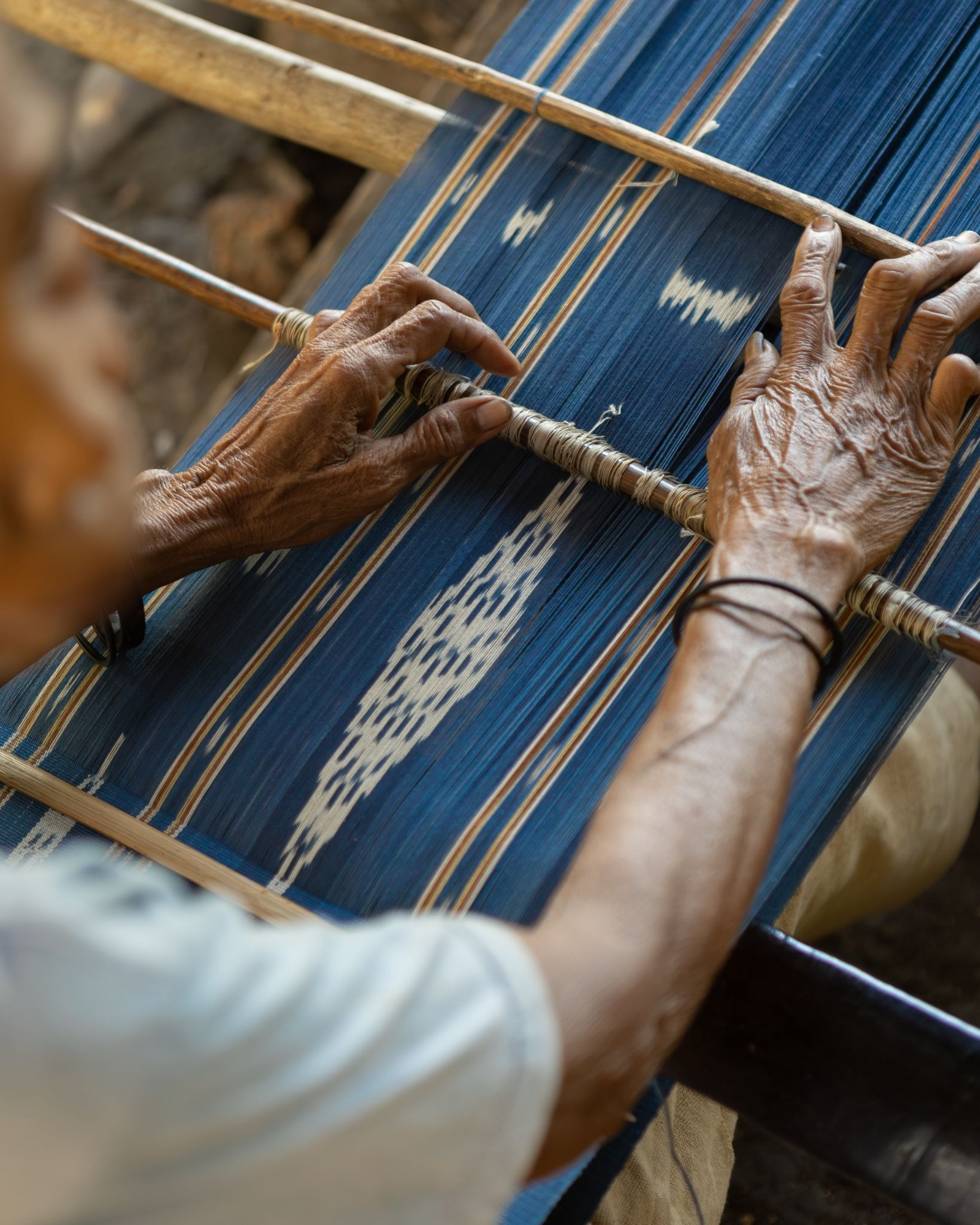
Simply put, the resist-dye method of Ikat is what sets it apart from Batik. In common Batik production, a finished white cloth receives its signature pattern through the application of hot wax before it reaches the dyeing step. Sumbanese Ikat, however, oversees the cotton yarn being manually hand-tied in intricate bundles using a looming tool, to resist the dye before the weaving process begins. Its unique pattern is all handwoven within the thread.
This process is the reason why a single piece of thread passes through up to 42 distinct production stages, and is also the reason why no two Ikat fabrics are identical, even when two weavers follow the exact same procedure and ancestral motif. Internationally-recognized museum textile collections hold examples of Sumbanese Ikat. The pieces available from our local artisan partners sit in that same category.
Are Pandan-Woven Pieces as Culturally Significant as Ikat?
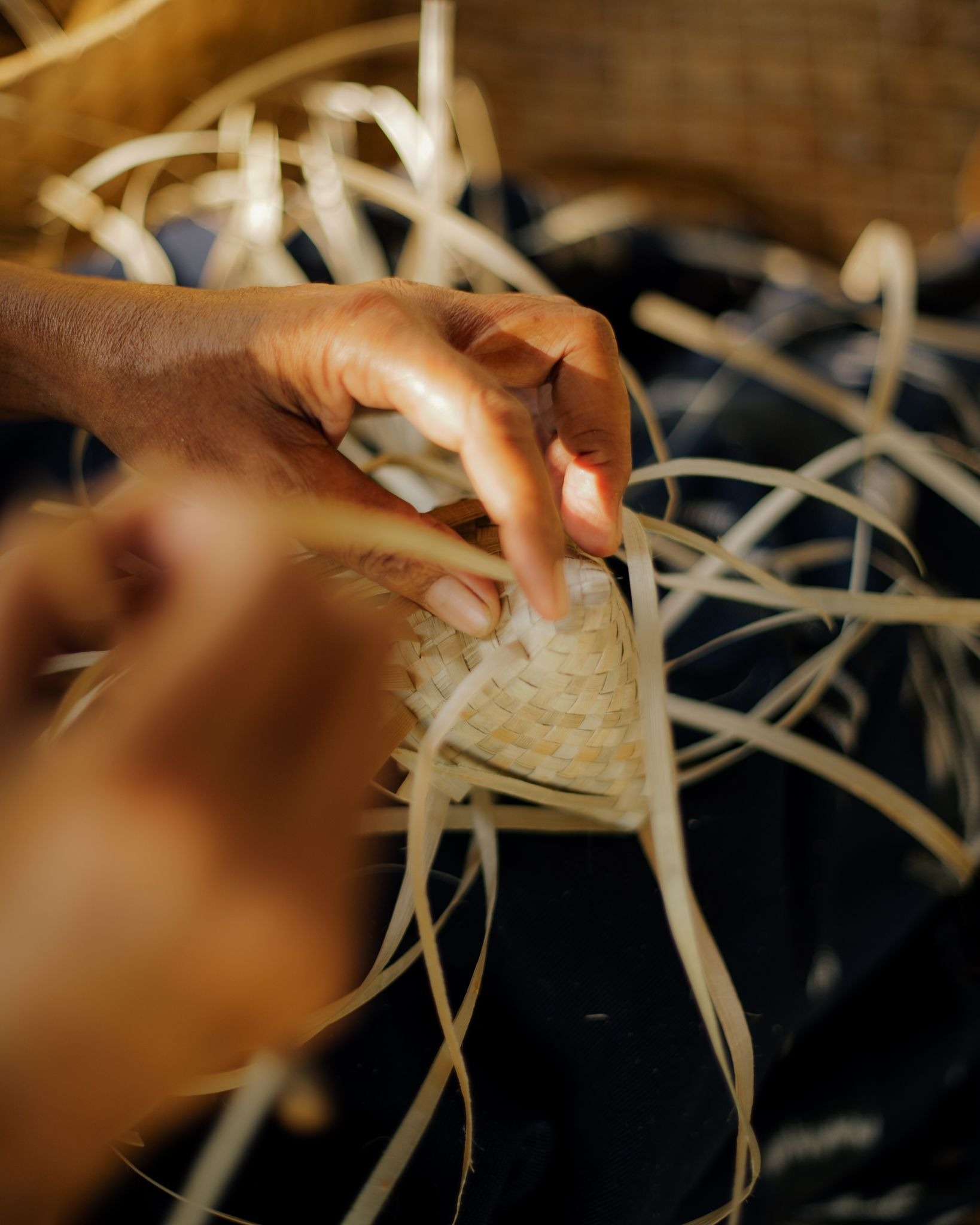
Yes. These are two different crafts that carry the same depth of meaning. Pandan weaving uses dried palm and pandan-style leaf fiber, harvested and prepared entirely by hand before a single strand is woven, by hand as well. The finished baskets, trays, boxes, and bags were traditionally used in Sumba's adat ceremonies to cover food offerings, often finished with a carved rooster motif representing the ancestors.
These items are also fully biodegradable and plastic-free, making them among the most environmentally-friendly souvenirs a traveler can bring home. And, much like Ikat, no two pieces are identical; subtle variations in weave tension and leaf tone make each basket its own singular object. Most are sourced from elder women in the local village for whom this skill is both a livelihood and an inheritance passed between generations.
What Else Can Guests Explore Beyond these Keepsakes?
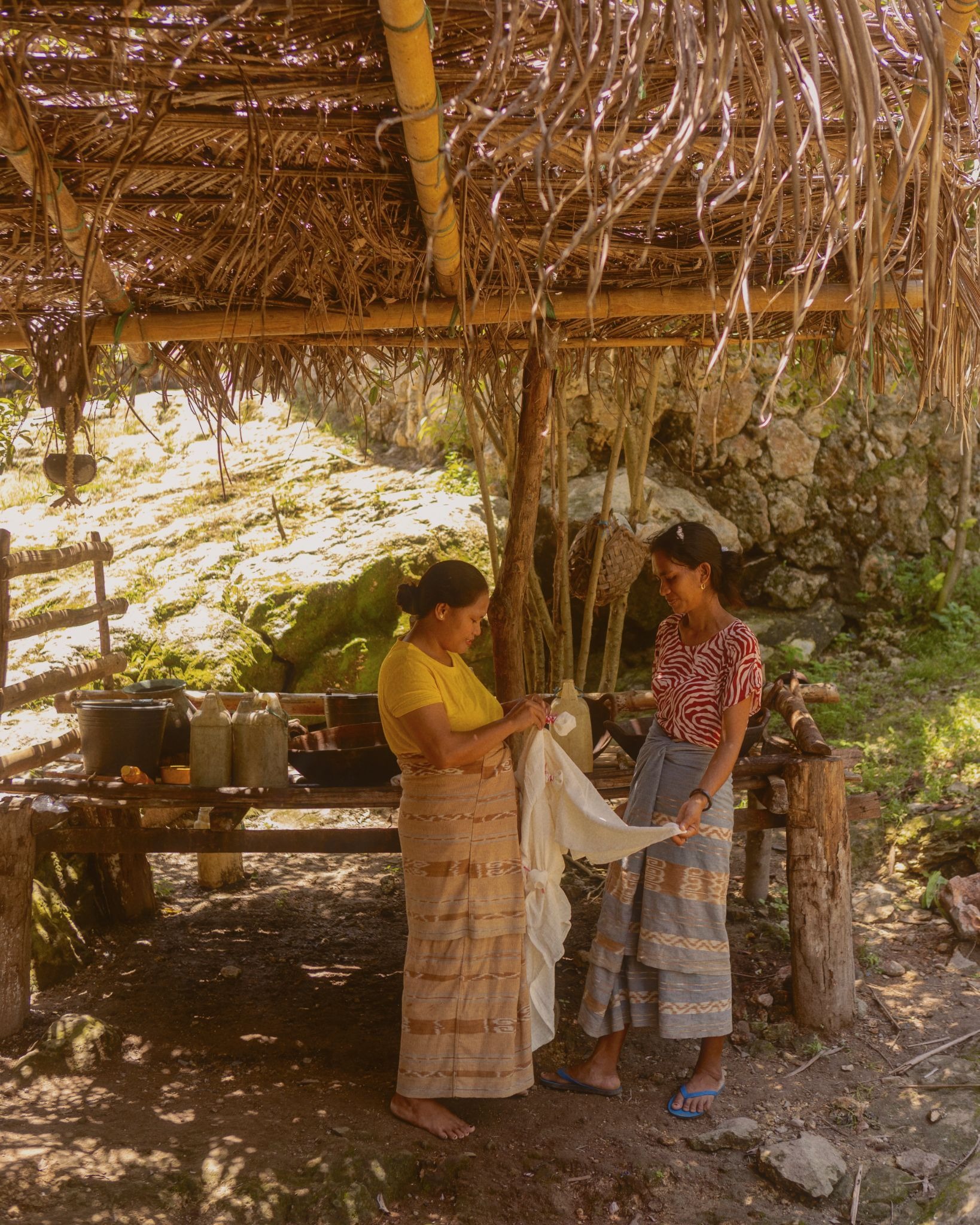
These artisanal crafts connect directly to the living cultural experiences available during your stay. Guests can watch Ikat dyeing and weaving in person through The Sanubari Sumba's guided Ikat tour, turning a future purchase into a memory of time spent with the artists who made it. The shift from mere transaction to a full immersive experience is a major part of what makes Sumba island travel so different from resort getaways found elsewhere in Indonesia.
Sumba’s more extensive cultural programmes can be found on our resort's explore page, covering village tours, pottery classes with local women artists, and horseriding experiences closely related to Sumba's famous sandalwood ponies.
What Travel Writers Notice About Sumba's Living Culture
These keepsakes aren't the only source of encountering Sumba's true heritage. As a widely regarded Sumba Hotel in Indonesia, The Sanubari Sumba weaves the island’s cultural story into the property itself. Independent travel writers in the past circled back to the same details: our resort guests don’t simply relax on the beach, they come back home carrying a piece of, and talking about, Ikat, the local women artists, and the fascinating stories of the locals’ everyday routine.
Hotels Above Par describe the property's approach to honoring Sumbanese craft in its interior design. Meanwhile, a reviewer for Mr & Mrs Smith summed up the island's deeper draw in a single line, noting that the resort's small-group excursions to nearby kampungs give guests a way into that world beyond the villa walls.
Frequently Asked Questions
I want to bring home an Ikat piece but I'm worried about authenticity. How do I know what I'm buying is genuinely hand-made and traditionally dyed?
Every Ikat piece crafted by our local female artisanal partners is sourced directly from Sumbanese materials, not commercial suppliers. Traditionally dyed Ikat has a slightly uneven, organic quality to the color that synthetic-dyed pieces lack. Our team can explain to you the original sources of these pieces, which is the clearest indicator of provenance.
Can pandan baskets and Ikat textiles survive a long-haul flight as checked or carry-on luggage?
Yes, both travel well. Pandan baskets are lightweight and structurally resilient; nesting smaller pieces inside larger ones protects them without adding significant weight. Ikat textiles fold flat and are best wrapped in cloth rather than plastic to prevent any moisture buildup. Neither requires special packing beyond basic care.
Are the symbolic motifs on Ikat and carved pieces considered sacred, or is it appropriate to use them as home decor?
The motifs carry cultural meaning but are not considered very sacred objects restricted from non-Sumbanese use. Ikat has historically been worn and displayed in a wide range of contexts beyond ceremony. Using a piece as a wall hanging or table runner is entirely appropriate, and many Sumbanese weavers take genuine satisfaction in knowing their work is displayed with intention in homes outside Indonesia.
The Best Thing You Bring Home From Sumba Is the Story Behind It
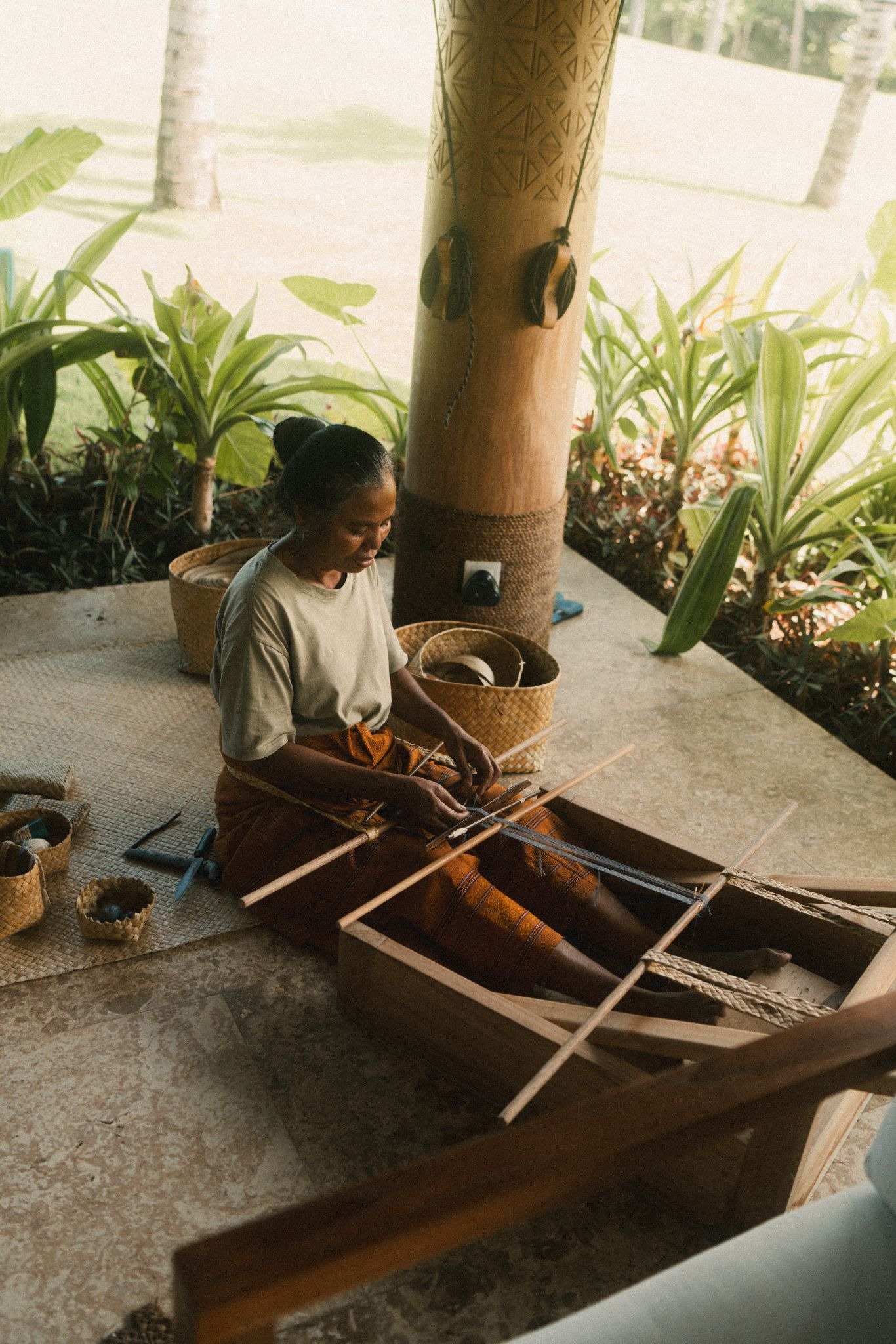
A woven basket or Ikat panel sitting on your shelf at home does something a simple photograph rarely manages: it keeps the place present. Not merely as a keepsake, but as a functional object made by hands using locally-sourced materials that exist only on the island. To some collectors, it even becomes a prized possession.
Check villa availability and plan your stay at The Sanubari Sumba, or explore other island activities and cultural experiences to see what's waiting beyond the souvenirs.
For more stories from West Sumba, visit our journal or follow us on Instagram @thesanubari. To ask about any souvenirs you can carry home or any cultural experiences available during your dates, reach us via e-mail at stay@thesanubari.com.
Book Your Gateway Now!
RESERVE NOW
Author
Angela
Angela is a multidisciplinary Creative, Branding & Marketing Strategist with 8 years of experience in Marketing and 5 years in Branding.
She has worked with international startups, agencies and social enterprises from Southeast Asia, Australia and Europe, and her past clients came from a range of industries, most primarily lifestyle, hospitality and technology. Her passion lies in creativity, social impact and business development. Currently, she oversees the Marketing department of The Sanubari Resort Sumba, driving its digital channels and nurturing communications with loyal and new guests.