Most travellers who ask us about Sumba start with beaches and surf. Then, about a day into their stay, someone mentions Matayangu. Or Lapopu. Or Weekuri Lagoon. And the itinerary quietly shifts.
Sumba's inland water sites are genuinely unlike anything else in Indonesia, not because they're the biggest or the most visited, but because they remain largely untouched. Reaching these destinations feels like encountering a rare discovery. This is the part of your Sumba travel guide that most people don't intentionally plan for until they arrive. We think that's worth changing.
Key Takeaways: Sumba's Natural Water Sites & What Matters Before You Go
- Matayangu drops into a prehistoric canyon in West Sumba. The drive through Waimanu village and open savannah is part of the experience, not just the route to it.
- Lapopu sits inside Manupeu-Tanah Daru National Park behind a bamboo bridge and a 15-minute trail where the endemic Sumba Hornbill is a genuine, not a promised, sighting.
- Weekuri Lagoon is saltwater fed through underground limestone filters; calm, luminous, and nothing like the wild coastline sitting just beyond its karst edges.
- April and May are the sweet spot: waterfalls still running full from wet season rains, skies beginning to clear; our seasonal guide covers how to time it.
- The Sanubari sits within 45 minutes of both Matayangu and Lapopu through the Wanukaka Valley; all excursions run as guided day trips, fully arranged.
Sumba Is Not Bali, And That Is Precisely the Point
The road between waterfalls in West Sumba passes through things that no longer exist in Bali. Buffalos crossing open savannahs, rice paddies worked by hand, alang-alang rooftops above village clusters that haven't changed shape in generations. In Marapu, the island's indigenous animist belief system, water sources are considered sacred sites tied to ancestral stories and ritual life. That context does something to the way a waterfall visit feels. It is not a tick on an itinerary.
Environmental psychology research supports what most guests feel before they can name it: time near moving water measurably lowers cortisol and slows the nervous system down. An afternoon at Lapopu works on you neurologically, not just scenically. If you want to understand what else shapes this island beyond its waterfalls, our Sumba cultural experiences guide covers the village tours, Ikat classes, and community programmes that most guests end up weaving into the same trip.
The Five Natural Water Sites Worth Planning Around

Matayangu Waterfall is Sumba's most dramatic cascade; a powerful single drop into a natural pool inside a prehistoric-looking canyon whose walls are draped in tropical vegetation. The Sanubari sits within 45 minutes of the site. The drive passes through Waimanu village and open savannah before the terrain tightens into the gorge. It consistently stops guests mid-sentence.

Lapopu Waterfall, inside Manupeu-Tanah Daru National Park, is one of the tallest in Nusa Tenggara. The trail crosses a bamboo bridge through protected rainforest where endemic species such as the Sumba Hornbill and Sumba Green Pigeon are realistic sightings, not brochure promises. The pool at the base is wide, cool, and swimmable. The cool mist and filtered forest light make the whole approach feel unhurried.
Weekacura Waterfall sees far fewer visitors than its more famous counterparts. Its secluded setting makes it the right recommendation for guests who want something that genuinely feels undiscovered; less spectacle, more solitude.

Waikelo Sawah is terraced rice paddies cascading toward the sea with small waterfalls feeding the tiers. What the aerial view captures is the geometry of it. What photographs can't capture is the scale, and the silence of standing in it.
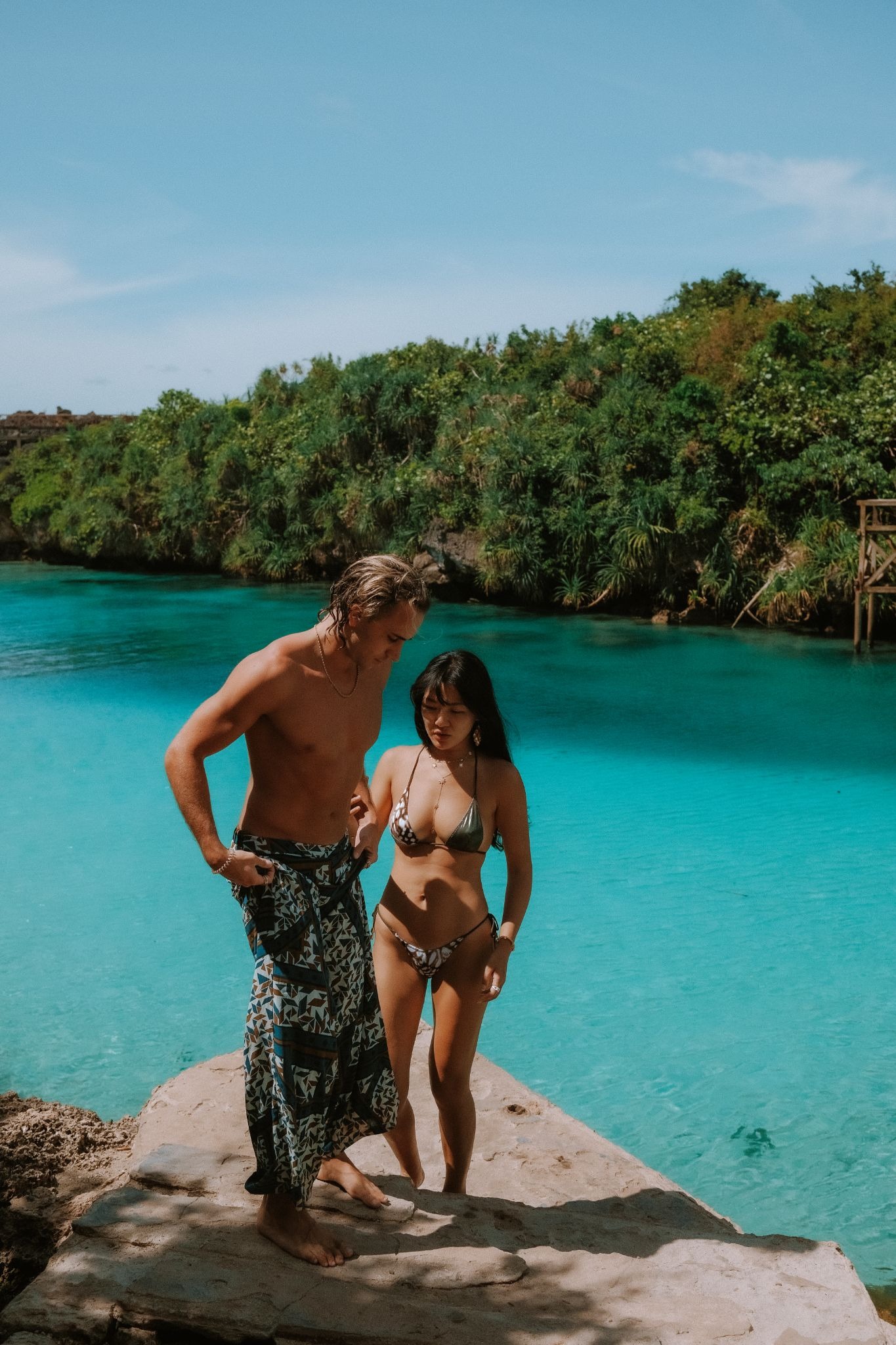
Weekuri Lagoon is a saltwater lake enclosed by limestone karst, fed through underground filters from the open ocean. The water is unusually calm and turquoise, a complete contrast to the wild coastline just beyond its edges. It works well as a half-day pairing with a waterfall visit on the same trip.
When to Go, and What the Journey Actually Involves
The best time to see Sumba's waterfalls at full power is during and just after the wet season, roughly from November through March. April and May are the sweet spot: cascades still running strong and skies beginning to clear. By mid-dry season some of the smaller falls reduce significantly, though Matayangu and Lapopu hold their flow longer than most. For a fuller picture of what each season actually means for your stay, our wet season guide is worth reading before you finalise dates.
Getting there involves off-road driving, short treks, and passing through living Sumbanese communities. It is not difficult, but it is an experience in itself. Guests who arrive expecting a clean transfer to a viewing platform tend to be pleasantly surprised. Those who embrace the journey consistently describe it as a highlight.
West Sumba's Natural Water Sites: A Quick Reference
All sites are reachable as guided day excursions from The Sanubari. Contact us at stay@thesanubari.com to plan the right combination for your stay.
What Guests Who Have Done It Say
The feedback we hear most consistently isn't about the waterfalls themselves, but about what the whole day felt like. Two guests have described it clearly.
Both returned home with something that photographs don't quite hold. That is the consistent pattern we see with guests who build at least one full inland day into their stay.
Before You Go: What Guests Usually Ask Us About the Waterfall Excursions
Do we need to book excursions in advance, or can we arrange them on arrival?
You can arrange excursions with us once you're here, though booking ahead during peak months helps with local guide availability. Contact our reservations team at stay@thesanubari.com before your trip and we'll work it into your schedule.
Are the treks to Matayangu and Lapopu manageable for all fitness levels?
Both involve short walks on uneven terrain. Lapopu requires roughly 15 minutes of hiking including a bamboo bridge crossing. Neither is technically demanding, but solid footwear and a reasonable level of mobility make the day considerably more comfortable.
Can we combine multiple water sites in a single day?
Yes, and we often arrange it that way. Matayangu and a Weekuri Lagoon pair well together without making the day feel rushed. Our team will suggest the right combination based on your stay length and what else you want to fit in.
Sumba Gives Back Something You Didn't Know You Were Missing

Slow travellers, wellness seekers, and genuine adventurers are finding Sumba, but not yet in numbers that change what makes it worth finding. Those who come now do so while the trails are still unhurried and the waterfalls still feel like a private discovery.
If you're still working out where to stay and if hiking and biking alongside waterfall visits appeals, our adventure activities guide covers how those days are structured.
Check availability and book your stay while your preferred dates are open. Review the resort FAQs if you're working through logistics. And if you want to talk through the excursions before you arrive — which sites, which season, what to bring — contact us directly at stay@thesanubari.com. We've done these trips with guests from across Australia, Europe, UK and the US. There's always a version of the day that fits.
Book Your Gateway Now!
RESERVE NOW
Author
Angela
Angela is a multidisciplinary Creative, Branding & Marketing Strategist with 8 years of experience in Marketing and 5 years in Branding.
She has worked with international startups, agencies and social enterprises from Southeast Asia, Australia and Europe, and her past clients came from a range of industries, most primarily lifestyle, hospitality and technology. Her passion lies in creativity, social impact and business development. Currently, she oversees the Marketing department of The Sanubari Resort Sumba, driving its digital channels and nurturing communications with loyal and new guests.