If you wish to have a Sumba Island Travel experience that goes beyond exploring the landscapes, Pasola Festival will be a highly interesting cultural experience to learn more about.
The Pasola Festival is a festival of faith, agriculture, and passion for the Sumbanese culture and history and identity of the Sumbanese people, and it holds deep meaning from start to finish; from its preparation, rituals, and traditional dresses. At The Sanubari Resort, we like to invite guests to spectate this event with our guides when it comes every year.
Key Takeaways: Understanding Pasola Before You Plan Your Trip
- Pasola is a sacred ritual, not a performance: It is rooted in ancestral belief systems and agricultural cycles.
- Timing is spiritually determined, not fixed: The exact dates depend on the arrival of nyale sea worms, interpreted by Marapu priests.
- The experience is raw and unscripted: Injuries can occur and are traditionally viewed as signs of blessing.
- Location matters: Each Pasola field within regions of Sumba offers different atmospheres.
- Respect and preparation shape the experience: Understanding etiquette and logistics makes the difference between watching and truly observing.
Modern Importance of Pasola Festival
Unlike other festivals, Pasola has not been turned into a staged performance. In Sumba, the ritual is associated with farming cycles and the need for divine patronage.
Pasola is believed to help the community with soil fertility and sustenance of crops for the forthcoming season. While the sight of blood is revolting, the locals view it as a good omen. This illustrates the reason why Pasola remains protected from modernisation and is not seen as a profit-making attraction.
The Spiritual Timing Behind Pasola Festival
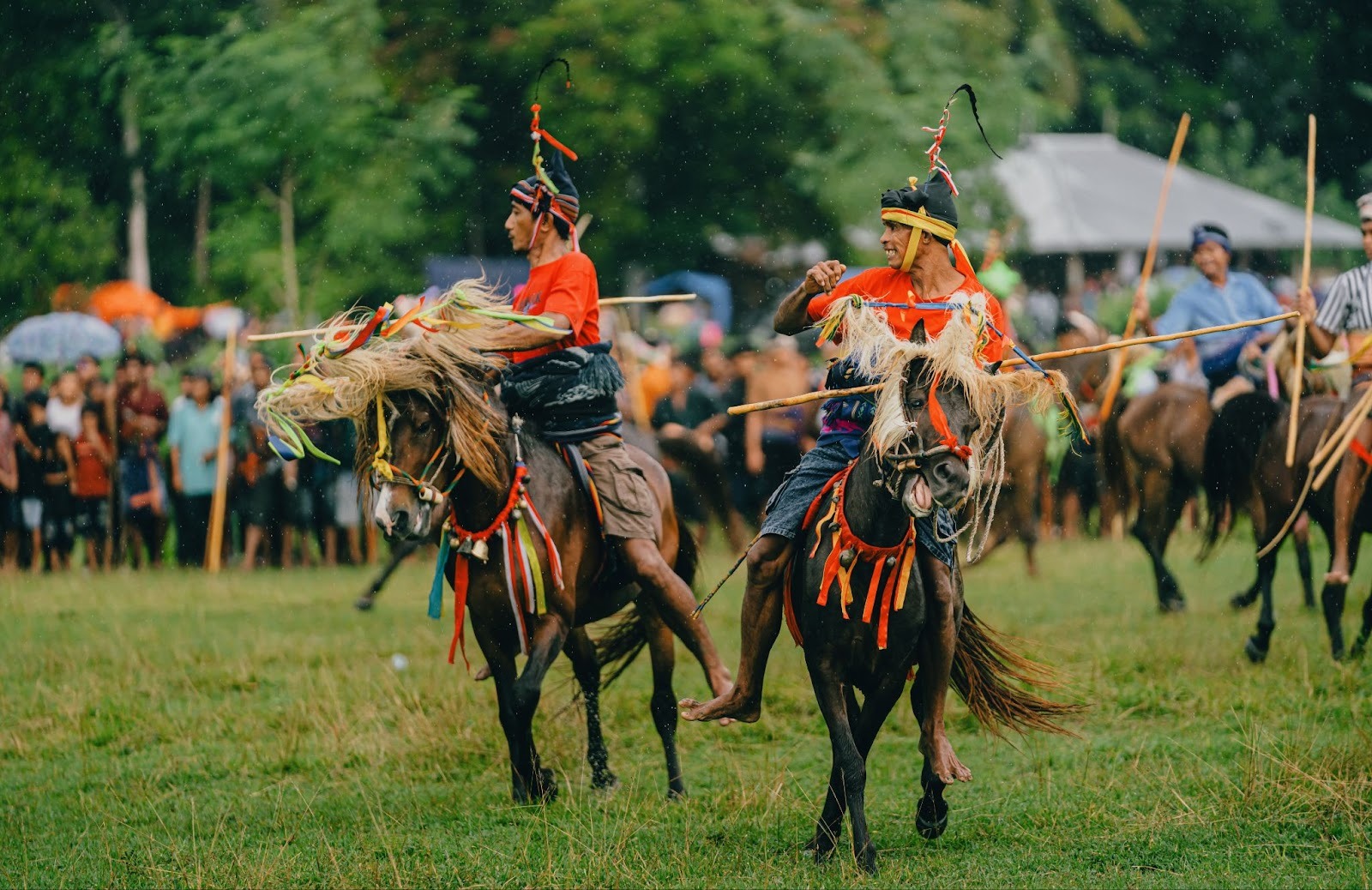
The ritual before Pasola festival takes place starts after the appearance of the nyale sea worms, which happen between February and March. These sea worms are viewed as spiritual messengers. Marapu priests see their arrival as a sign from the ancestral spirits that it is time for the planting season.
Understanding this process helps reframe expectations for first-time visitors. Pasola is not carefully organized for travelers—it occurs in a time where nature and spiritual belief align for bountiful harvest.
The Story Behind the Spears: Tragic Love and Communal Memory
Pasola also commemorates an ancient story passed down through generations. According to local legend, a noblewoman believed her husband had died at sea. When he returned to find her remarried, conflict erupted between villages. What began as violence evolved into a ritualized form of combat designed to prevent real war while honoring emotional truth.
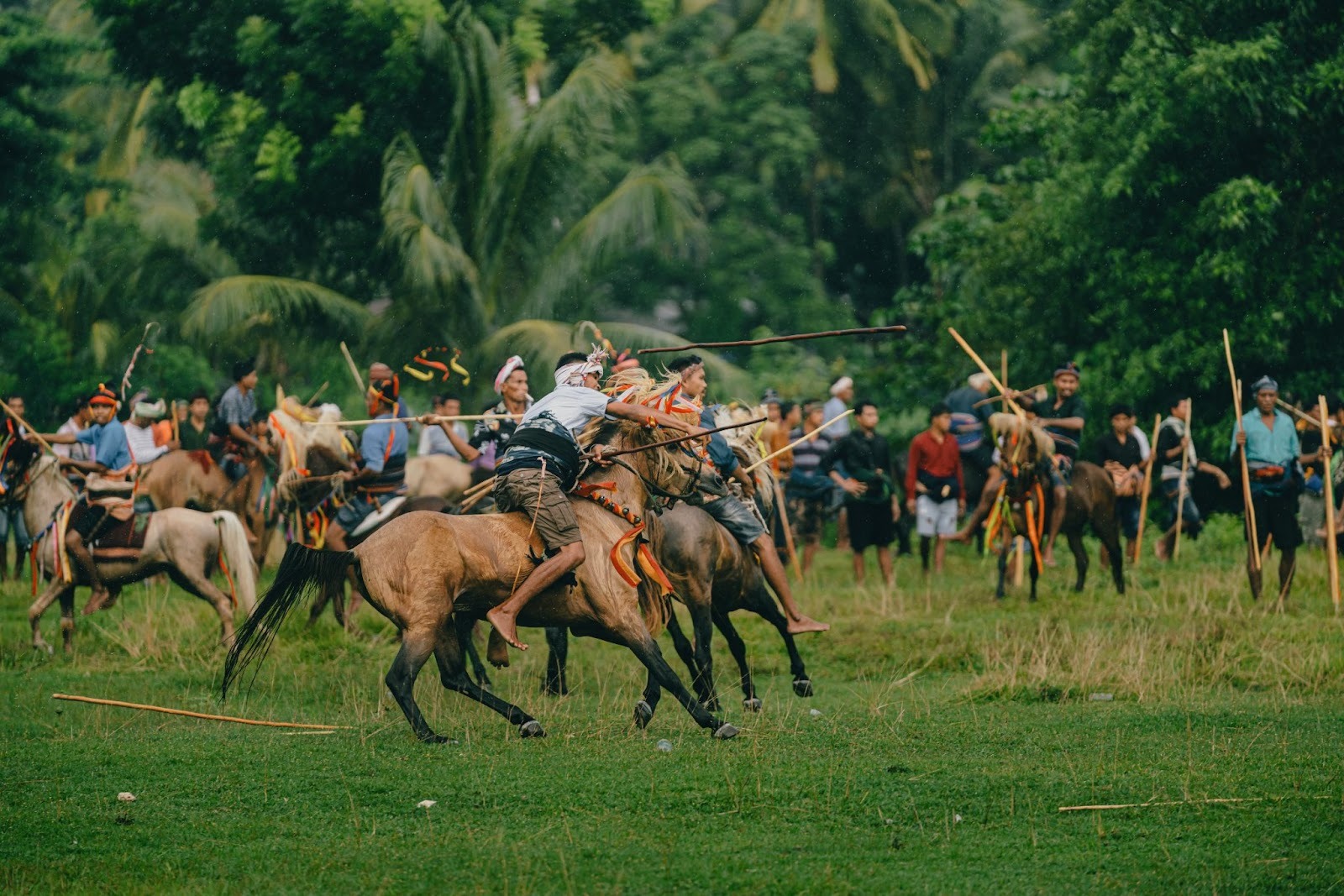
Today, the ritual reenacts this story symbolically. Wooden spears replace weapons of war, and the battlefield becomes a sacred space rather than a site of destruction.
What You Will See During Pasola Festival
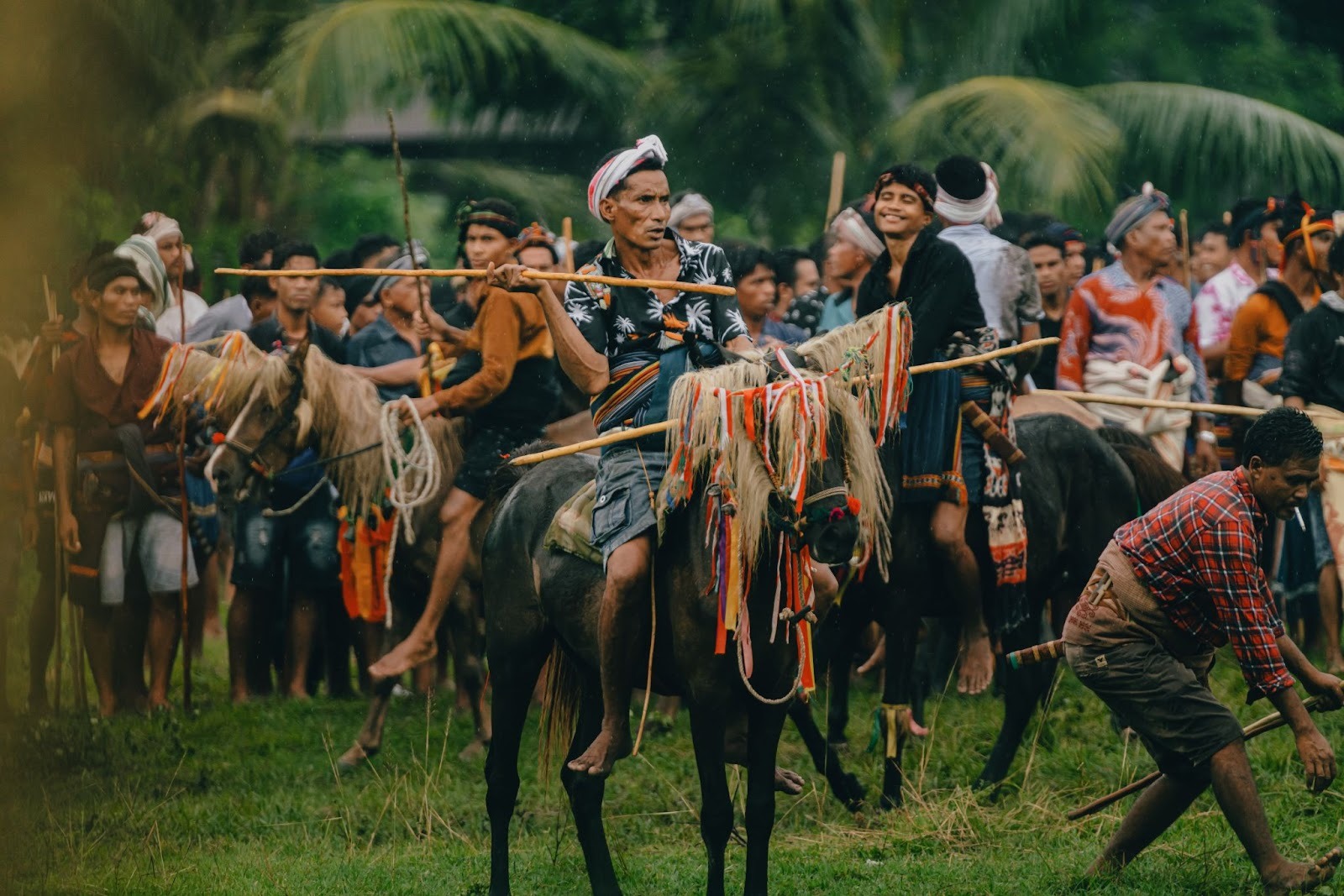
Horsemanship Passed Down Through Generations
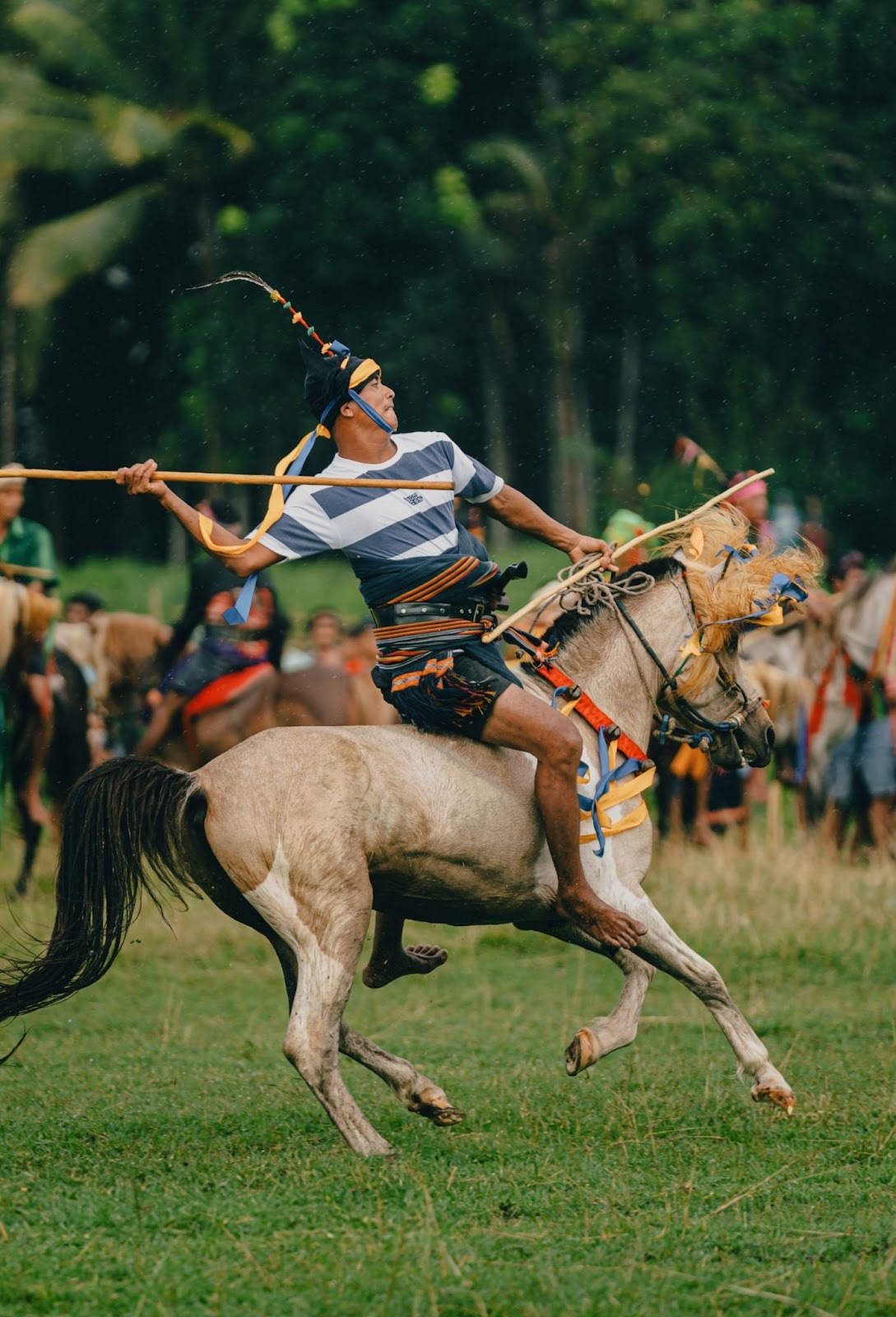
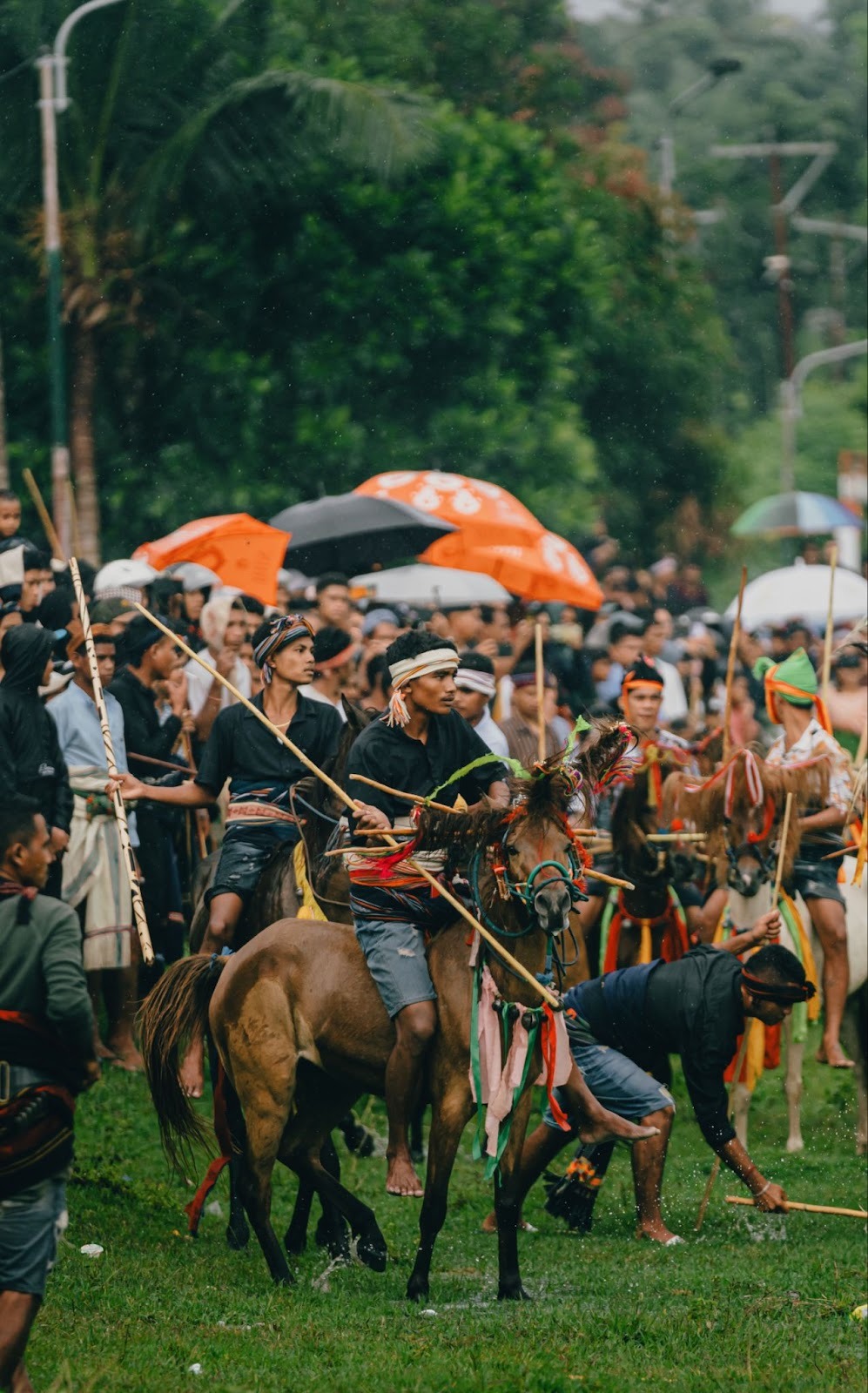
Expect dozens of bareback riders charging across open grasslands at full speed. These horses are locally raised and trained, and riders start learning as children. The coordination, balance, and fearlessness on display will be remarkable.
Traditional Dresses and Family Heirlooms
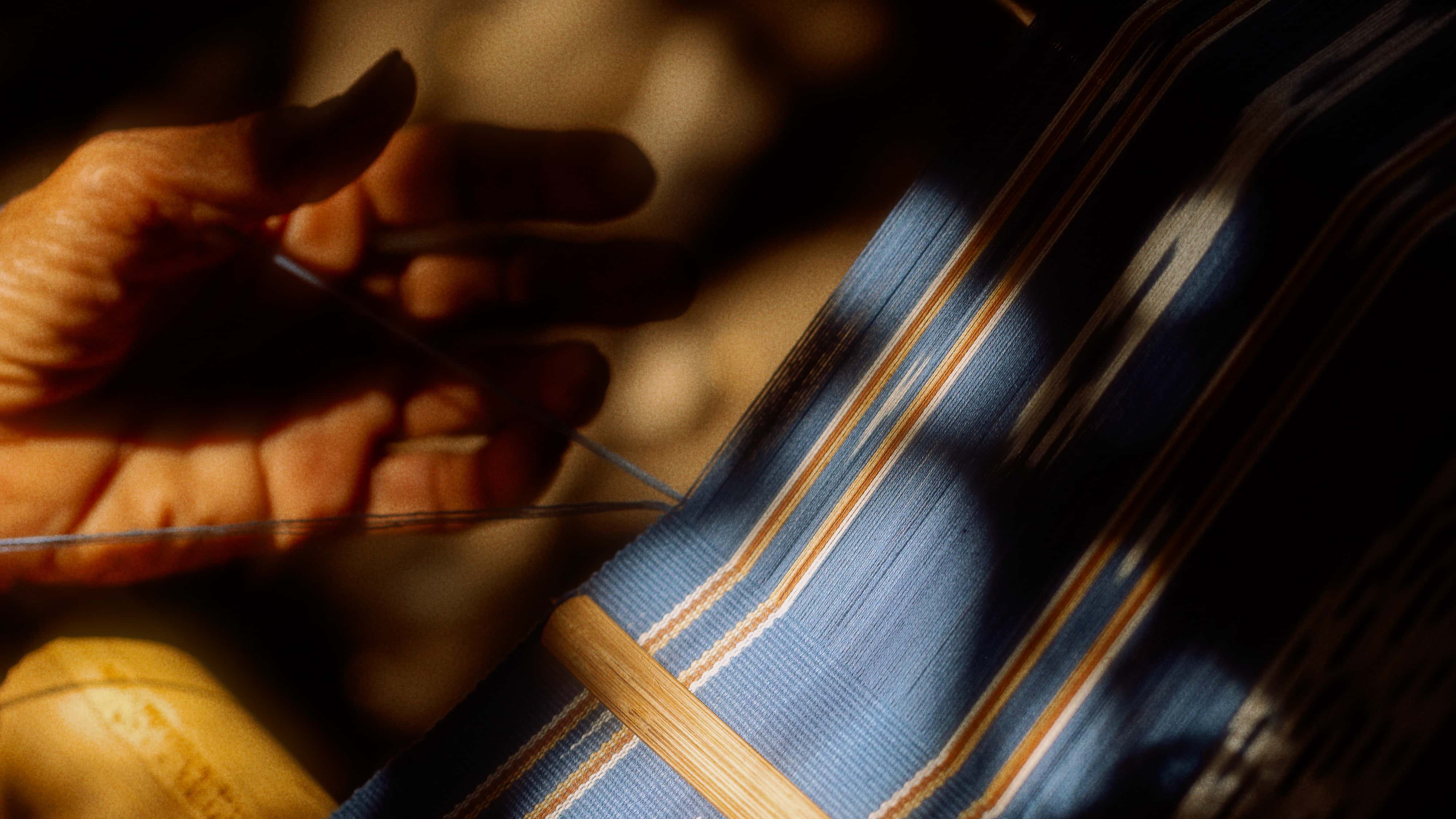
Participants wear handwoven ikat textiles, ceremonial headdresses, and beaded accessories. Many carry heirloom swords or spears that have been passed down for generations, making each rider’s appearance deeply personal.
Where Pasola Takes Place in Sumba
Pasola is held across four primary districts:
- Lamboya
- Kodi
- Gaura
- Wanokaka
Each location has slightly different dates, rituals, and pacing. This sometimes allows travelers to witness more than one Pasola event during a single visit—if timing and logistics align.
Respectful Viewing: What We Always Advise Our Guests
Visitors are welcome, but only as observers.
We always recommend:
- Dressing modestly and avoiding bright, attention-grabbing clothing
- Keeping a respectful distance from ritual areas unless invited closer
- Never interrupting ceremonies or blocking riders
- Being accompanied by local guides who can explain symbols, chants, and transitions
This guidance is especially important for travelers unfamiliar with Sumbanese culture, where customs differ significantly from more developed destinations.
Practical Reality: What to Expect on the Ground
Infrastructure near Pasola fields is limited. Shade, seating, and restrooms are minimal or nonexistent. Timing can shift without notice. This is part of the experience.
From our perspective, travelers who embrace this uncertainty tend to leave with a deeper appreciation. Pasola festival rewards patience more than planning.
Pasola at a Glance: Facts and Considerations
Combining Pasola With Broader Sumba Exploration
Many of our guests choose to pair visiting Pasola festivalwith deeper exploration of the island. Traditional villages, megalithic tombs, ikat weaving class, and untouched coastlines all offer context that enriches the entire Sumba experience.
For those interested in nature-based exploration, we often suggest discovering Sumba’s waterfalls and beaches that are accessible from our location. These landscapes provide a grounding counterbalance to the intensity of Pasola festival and reveal another side of the island’s rhythm.
How We Guide Guests During the Season of Pasola Thoughtfully
Over time, we have seen that the main challenge for visitors is not access—it is understanding.
Our role is often to help guests interpret what they see, connect cultural elements to lived realities, and plan travel flow around unpredictable timing. This approach aligns naturally with our belief in sustainable resort travel—where cultural respect matters as much as comfort.
Questions We Often Hear From Thoughtful Travelers
Is Pasola suitable for all travelers?
The best fit for Pasola is people who are open-minded, interested in learning about new culture and are willing to adapt as Pasola's logistics could be unpredictable. Children or people who prefer a more tailored or organized experience, may find Pasola festival overwhelming.
Can Pasola be combined with a relaxing stay?
Yes. After spectating the Pasola festival, you can spend your days relaxing or doing calmer island activities at our resort.
How far in advance should we plan?
Accommodation can be booked early so it is good to be organized there, but for the actual there needs to be day-by-day flexibility and an understanding that things will shift as the days progress.
Considering Pasola Festival as Part of Your Sumba Experience
Pasola festival is not designed for everyone, which is part of its beauty. It is a festival where deeply held traditions of spirituality, the land and people are interlinked. For those seeking to travel to Sumba Island for more than the stunning landscapes, and who wish to understand the spiritual practices of the local people, witness ceremonial customs that regulate the agricultural cycles, and embrace the unknown and the unexpected, Pasola could be an authentic, anchoring experience.
Here at The Sanubari Resort, we have seen guests who approach Pasola Festival with openness and respect, and they leave with a stronger connection to Sumba. If you are considering aligning your visit with the Pasola festival season and would like guidance on visits, timing, or how to plan your stay thoughtfully with our cultural experiences, our Reservations team is always happy to assist. You can reach us directly by email at stay@thesanubari.com to begin planning a journey that feels meaningful, well-considered, and true to the spirit of Sumba.
Book Your Gateway Now!
RESERVE NOW
Author
Angela
Angela is a multidisciplinary Creative, Branding & Marketing Strategist with 8 years of experience in Marketing and 5 years in Branding.
She has worked with international startups, agencies and social enterprises from Southeast Asia, Australia and Europe, and her past clients came from a range of industries, most primarily lifestyle, hospitality and technology. Her passion lies in creativity, social impact and business development. Currently, she oversees the Marketing department of The Sanubari Resort Sumba, driving its digital channels and nurturing communications with loyal and new guests.